SEO, Pinterest & Analytics
SEO, Pinterest & Analytics
SEO informs everything I do – but it doesn’t drive everything I do. Some content is created to rank, some to build trust, some to strengthen community and some to capture a moment. Knowing which is which, and being able to execute each with equal intention, is key.
SEO & Site Structure
Creative work without data is just guessing. I approach SEO, as the foundation that makes everything else more effective – using data to inform content decisions, site structure to support user experience, and performance reporting to understand what’s working and why.
SEO in the Age of AI
SEO in 2026 looks fundamentally different from SEO in 2020. Google’s AI Overviews, the growth of zero-click behaviour, and the volume of AI-generated content have changed both how content is discovered and what it takes to stand out. In this environment, genuinely expert-led, original, human content becomes more important, not less.
Pinterest as a Visual Search Engine
Most people think of Pinterest as a social media platform. It isn’t – it’s a visual search engine. And that distinction changes everything about how you approach it. Pinterest users are planners and researchers with high commercial intent. They’re not scrolling to be entertained – they’re searching for ideas, products and inspiration with the intention of acting on them. That makes Pinterest one of the most powerful organic channels for driving real, trackable revenue – if you know how to use it.
Pinterest Performance Results
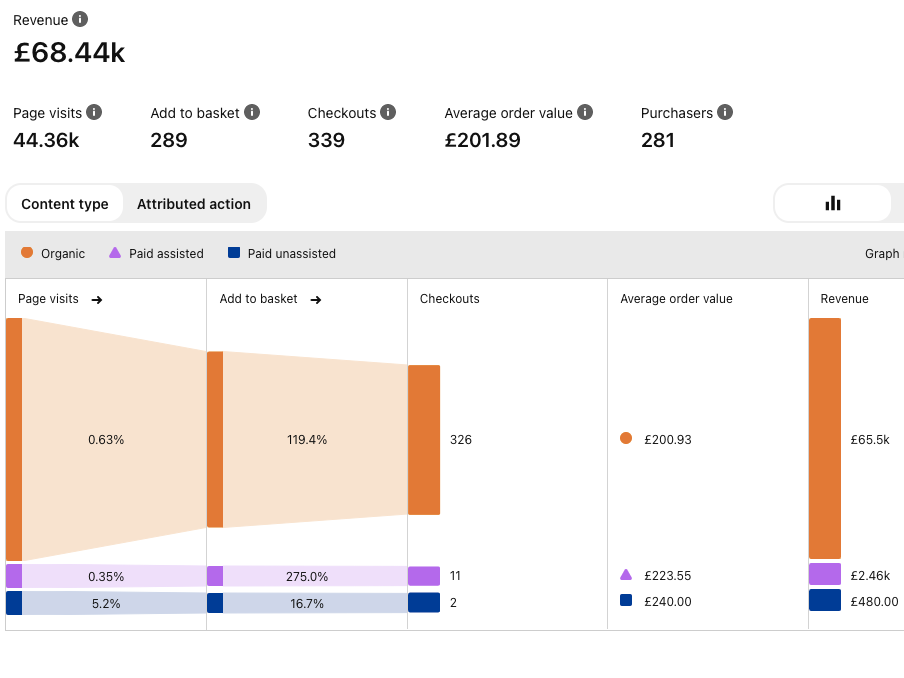
This was the result across one year of working with an ecommerce brand. Pinterest organic content attributed to over £65,000 in direct revenue in a single year – with 95% of all Pinterest attributed revenue coming from organic content alone. No ad spend. Just strategy, keyword optimisation and consistent content creation.
- Over 500k – Peak monthly impressions
- Over 22,000 – Peak monthly engagements
- Over 4,800 – Peak monthly outbound clicks to website
- 3.1–4.5% – Consistent engagement rate across reporting period – industry average is typically 0.5–1%
- Over 44,000 – Annual page visits to website attributed to Pinterest
- Over £65,000 – Annual organic revenue attributed to Pinterest content
- Over £200 – Average order value of purchases attributed to Pinterest — demonstrating a high commercial intent audience
- Nearly 300 – Purchasers tracked directly from Pinterest activity in one year
Web Platforms & CMS
Understanding SEO at a technical level means understanding the platforms content lives on. I have built and managed WordPress websites independently for small business clients – including this portfolio site – as well as a WooCommerce ecommerce store for my own yoga business, Hidden Lotus Yoga. This includes full site builds from scratch, hosting configuration, DNS management, domain setup, navigation architecture and content taxonomy.
Alongside this I have worked within Magento – one of the most widely used enterprise ecommerce platforms – editing and managing content, publishing blogs via the FishPig WordPress plugin, updating product pages and working within the site’s existing architecture. While I haven’t built in Magento seven years of hands-on content management within a live Magento ecommerce environment gives me a practical working knowledge of how the platform operates and how content decisions affect SEO performance within it.
This combination – building in WordPress and working operationally in Magento – means I understand ecommerce CMS environments from both a build and a content management perspective.
Tools & Certifications
- Google Search Console: Coursera Certified 2026
- Basic of SaaS Business Online – Certfied 2026
- SEMrush: Use across keyword research, competitor analysis and performance tracking
- Pinterest SEO & Analytics: 7 years of monthly performance tracking and reporting across multiple brands
- Yoast SEO — 7 years
- Claude and Perplexity as AI research tools
- Semrush AI SEO course – in progress
- Google’s AI in Search – in progress
- Google Analytics 4: Certification in progress – Google Skillshop
- Google Ads: Certification in progress – Google Skillshop
- Google Digital Garage: Certification in progress – Google Skillshop
- Meta Blueprint: Digital Marketing Associate – in progress